A Backyard Wall on Auger Trail That Was Coming Apart
On Auger Trail, about 15 minutes from Sweetwater Creek State Park and half an hour from the New Manchester Mill Ruins, the old block wall behind this house had reached the end of its life. Water was coming straight through the face after every storm, and it was carrying the soil from inside the wall out with it. Cracks ran across the block, patches covered older patches, and the whole thing looked worse each season. The homeowner called us to tear it out and replace it with a properly drained segmental retaining wall before it let go.
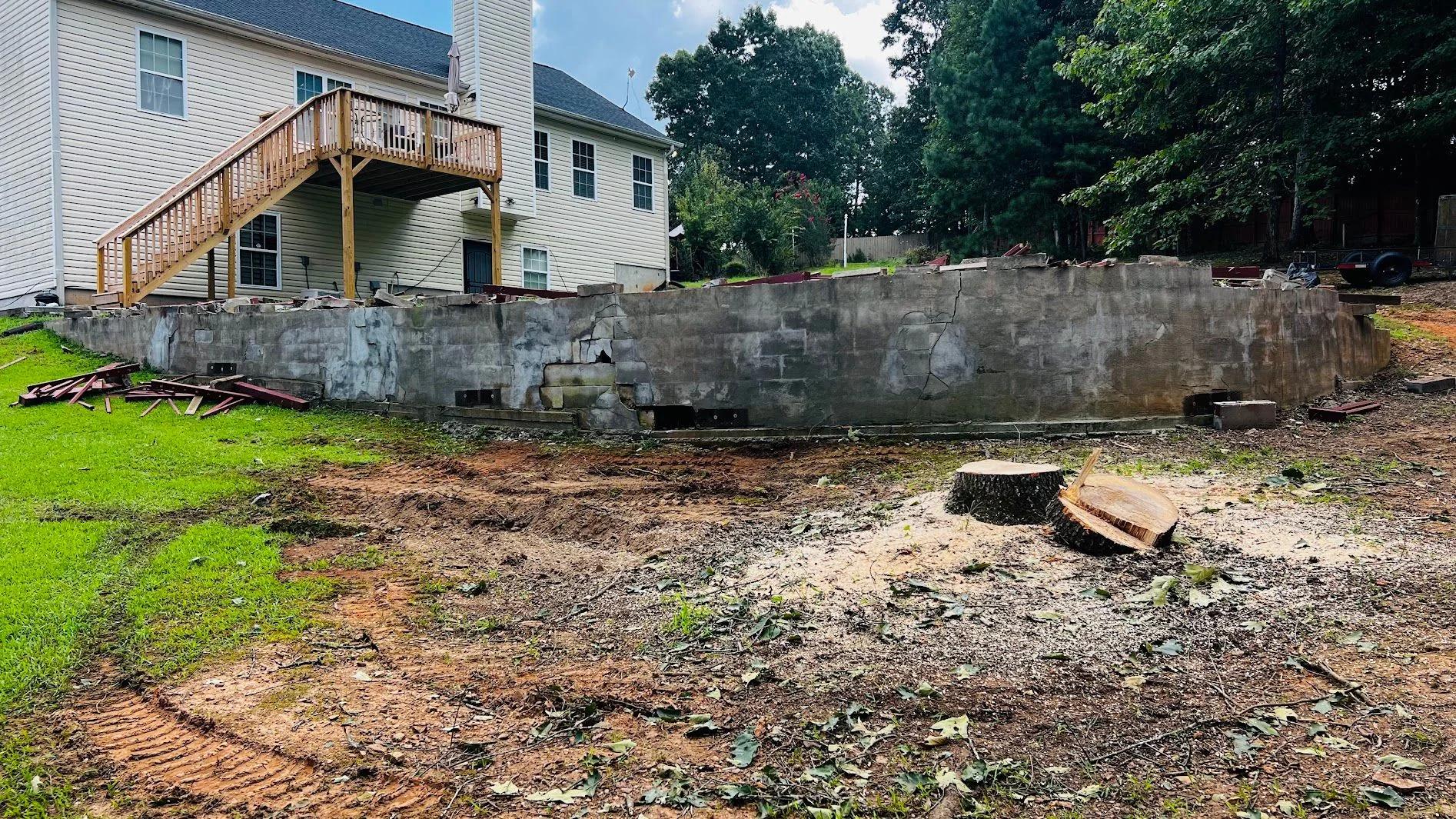
- Water Coming Through the Face: With nothing behind it to relieve the pressure, rain soaked the backfill and pushed out through the joints.
- Fill Washing Out: Each wet spell carried a little more of the wall's own backing material through the cracks and onto the lawn below.
- Hard to Look At: Stains, patches, and debris along the base made the view from the deck one of the worst parts of the property.
Auger Trail Wall at a Glance
- New Wall: About 67 linear feet of modular block, roughly 5 feet tall at its highest point.
- Old Wall Out: The existing block wall was demolished and removed before any new digging started.
- Built Into the Slope: Geogrid reinforcement, footing drainage, and #57 stone behind the block, with filter fabric keeping the surrounding soil out of the stone.
- More Wall Than Planned: Extra wall area was added to the job beyond the original estimate.
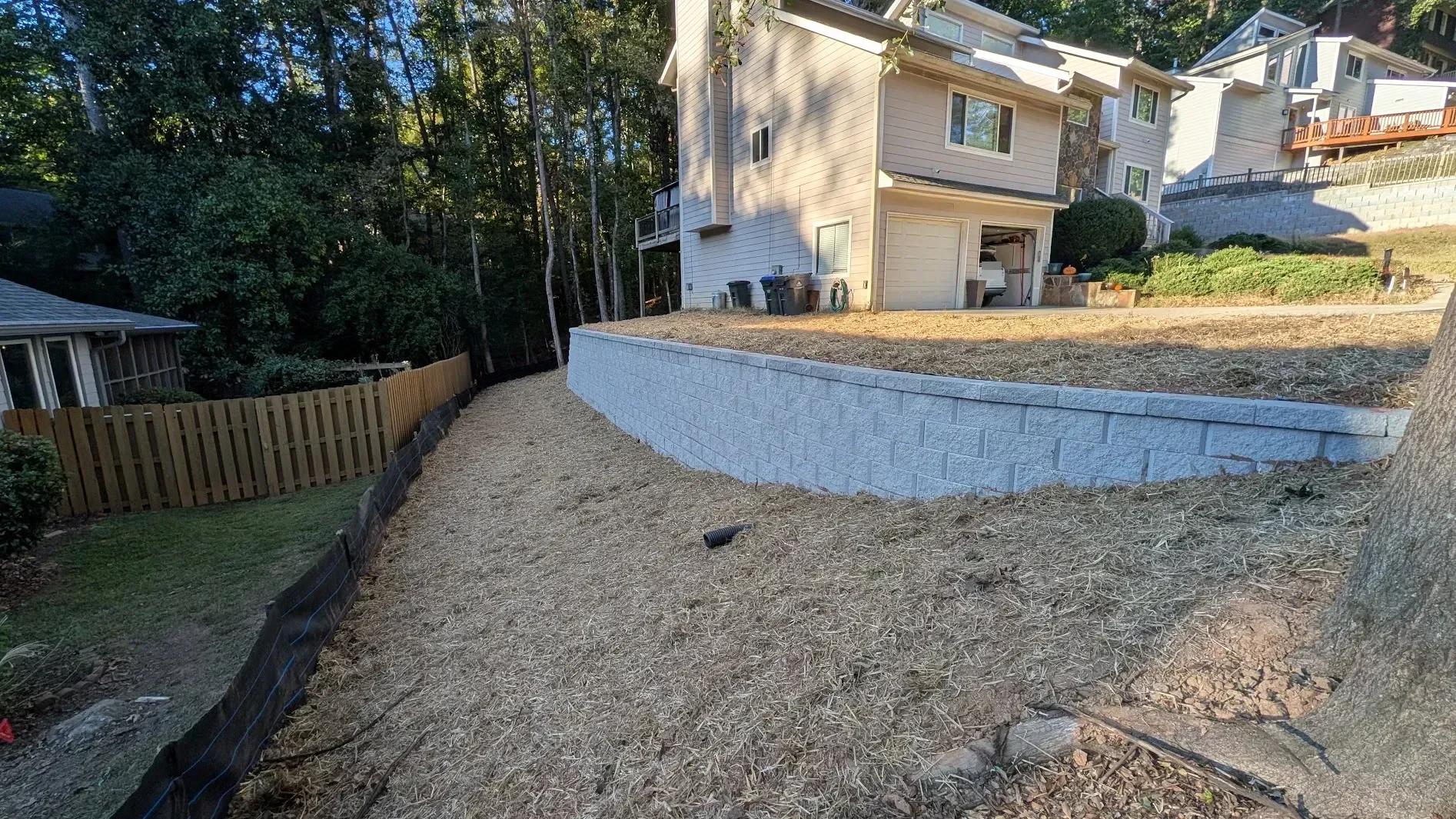
- Catch Drain: The upper lawn slopes to a catch drain that sends surface water under the footing to the lower side of the wall.
- Trees Cleared: Three trees in the lower yard taken down, with the branches and cut debris hauled away.
Replacing a Failing Retaining Wall in Douglasville, GA
The first job was opening up the lower yard. Three trees stood out in front of the old wall, so we knocked them down and hauled the branches and cut debris away, which gave the crew and equipment room to work along the full length of the wall.
Then the old wall came down. Water had been building up behind it for years with nowhere to go but through the face. We broke out the old block, hauled away the debris, and cut a fresh line in the red clay. The new curve follows almost the same footprint, sweeping from under the deck stairs out toward the middle of the yard. Working as Douglasville retaining wall contractors on this job, our goal was a replacement built to handle the water the old wall couldn't.
The new wall is a dry-stacked segmental retaining wall. Each course locks into the one beneath it at a set backward offset, so the face leans slightly into the slope. Because the joints aren't bonded, the wall can take minor settling or ground movement without the kind of cracking that broke up the old wall. The block alone doesn't hold the hill, though. The base course sits below grade, and layers of geogrid run back into compacted backfill between courses, turning the soil behind the face into a reinforced mass that works together with the wall. Behind the block, a column of clean #57 stone collects water and carries it down to the footing drain, while filter fabric keeps red clay out of the stone. That drainage is what relieves the pressure that once pushed water through the old wall.
Project Gallery
The New Wall From Every Side
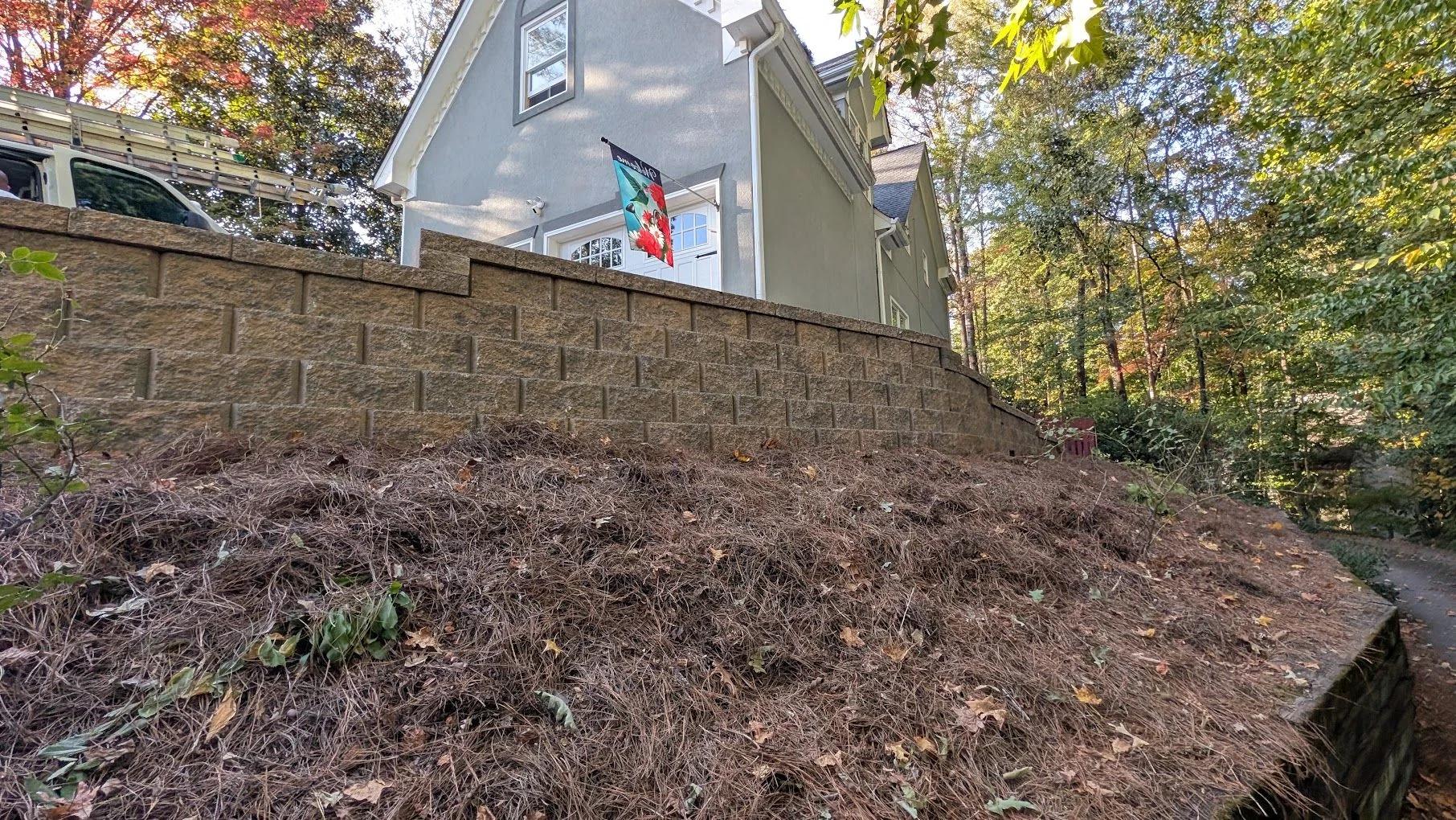
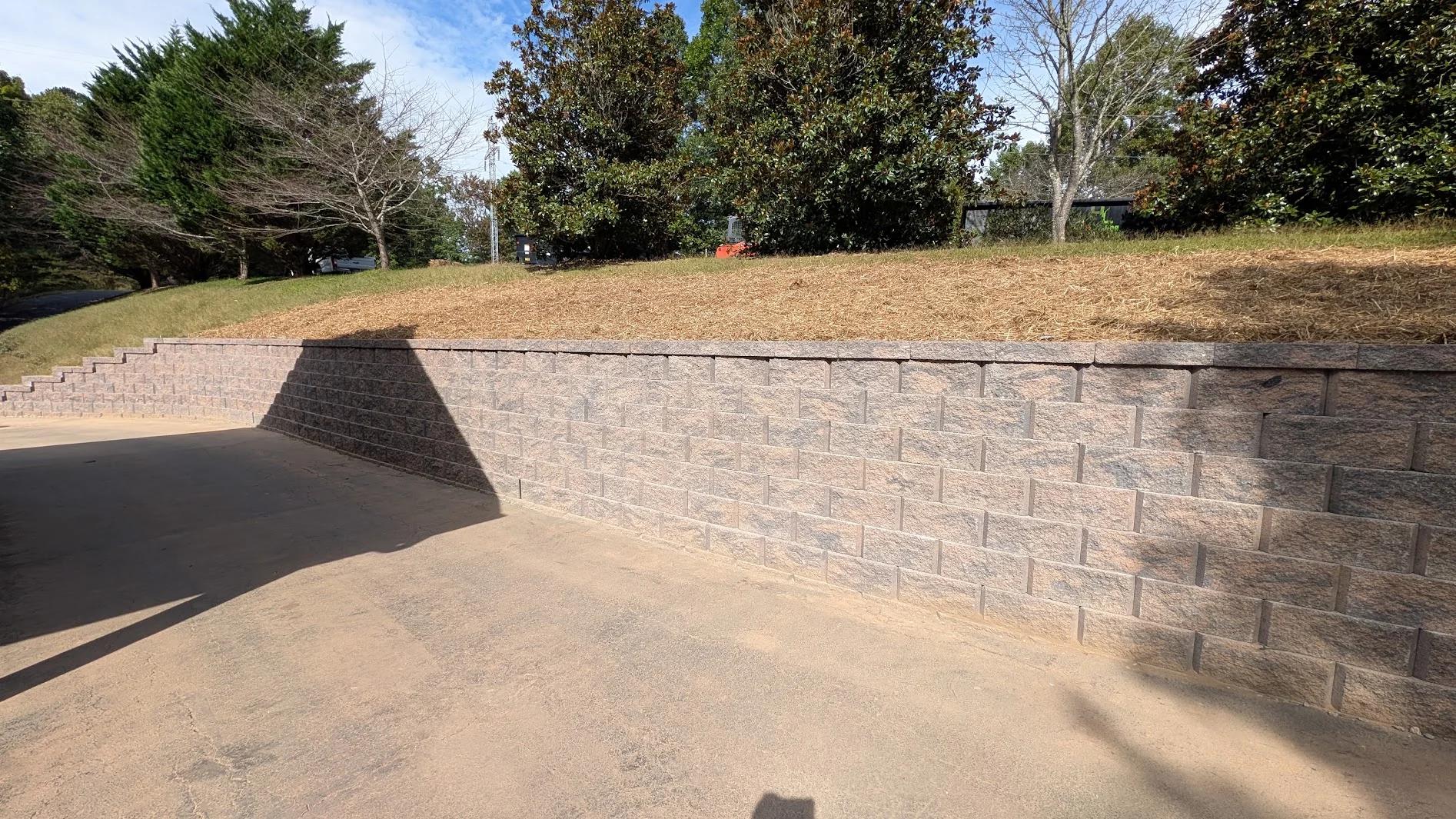
The finished wall from the lower yard, under the deck, along the curve, and at both ends. Look for the step in the cap line and the way the low end turns back toward the house.
What Was There Before
This is the old wall on the day work started, with the cracks, patches, and stains that showed where water had been working through it for years.
A Leaking Wall Only Gets Worse
When water is coming through a retaining wall, the soil behind it is going with it, and every storm takes a little more. Patching the face doesn't fix the cause. A wall with real drainage and reinforcement behind it does, and replacing it before it collapses costs far less than cleaning up afterward.