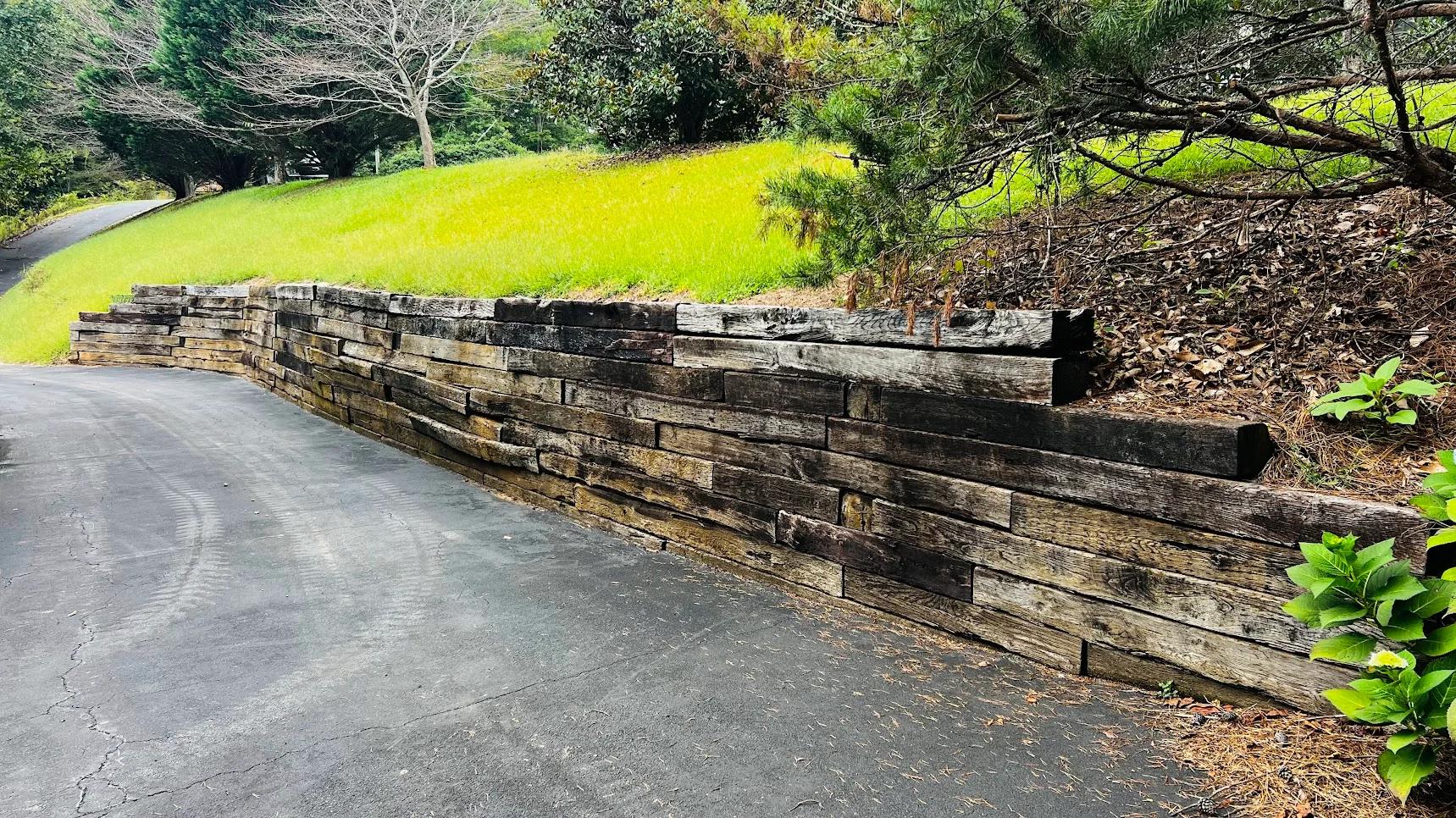
Old Railroad Ties Holding the Bank Above the Carport Drive
On Mountainside Dr, a short drive from Black Rock Mountain State Park and The Foxfire Museum, the driveway up to this carport ran beside a long wall of railroad cross ties. Years in the mountain weather had grayed and split the timbers, and the upper courses were starting to lean toward the asphalt. The owner wanted a wall that wouldn't need replacing again, so we handled a full cross tie wall replacement with modular block from one end of the drive to the other.
- Timbers at the End of Their Life: Split, weathered ties with loose ends sticking out near the top of the driveway curve.
- Two Hours From Home Base: Rabun Gap is well outside the area we normally cover. The size of the project, this wall plus a two-tier system lower on the same drive, is what made the trip worth it.
- An Owner Back in Florida: The homeowner couldn't be on site, so we sent progress photos and kept in touch by phone, text, and email as the work moved along.
What Went Into the Carport Wall
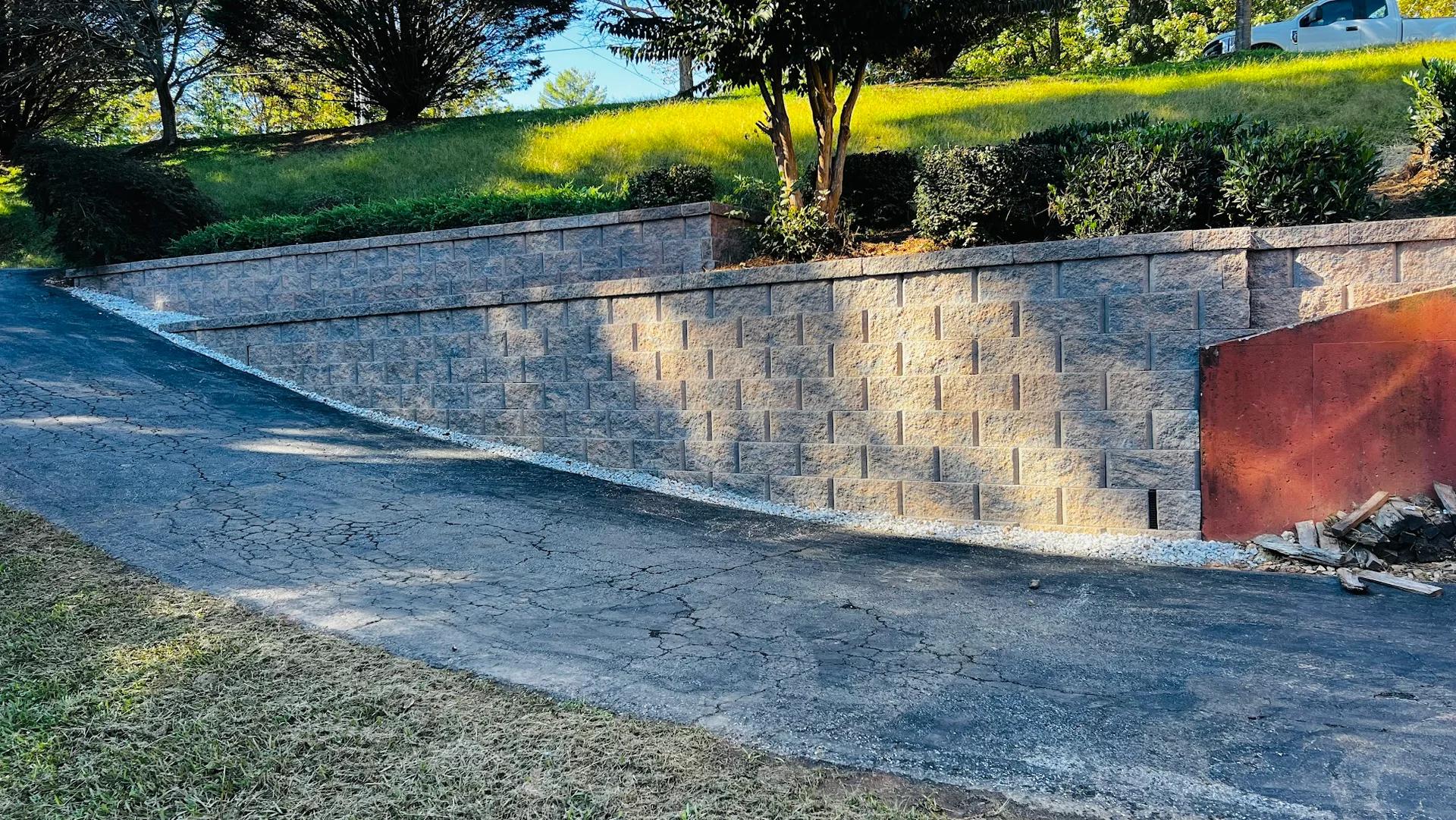
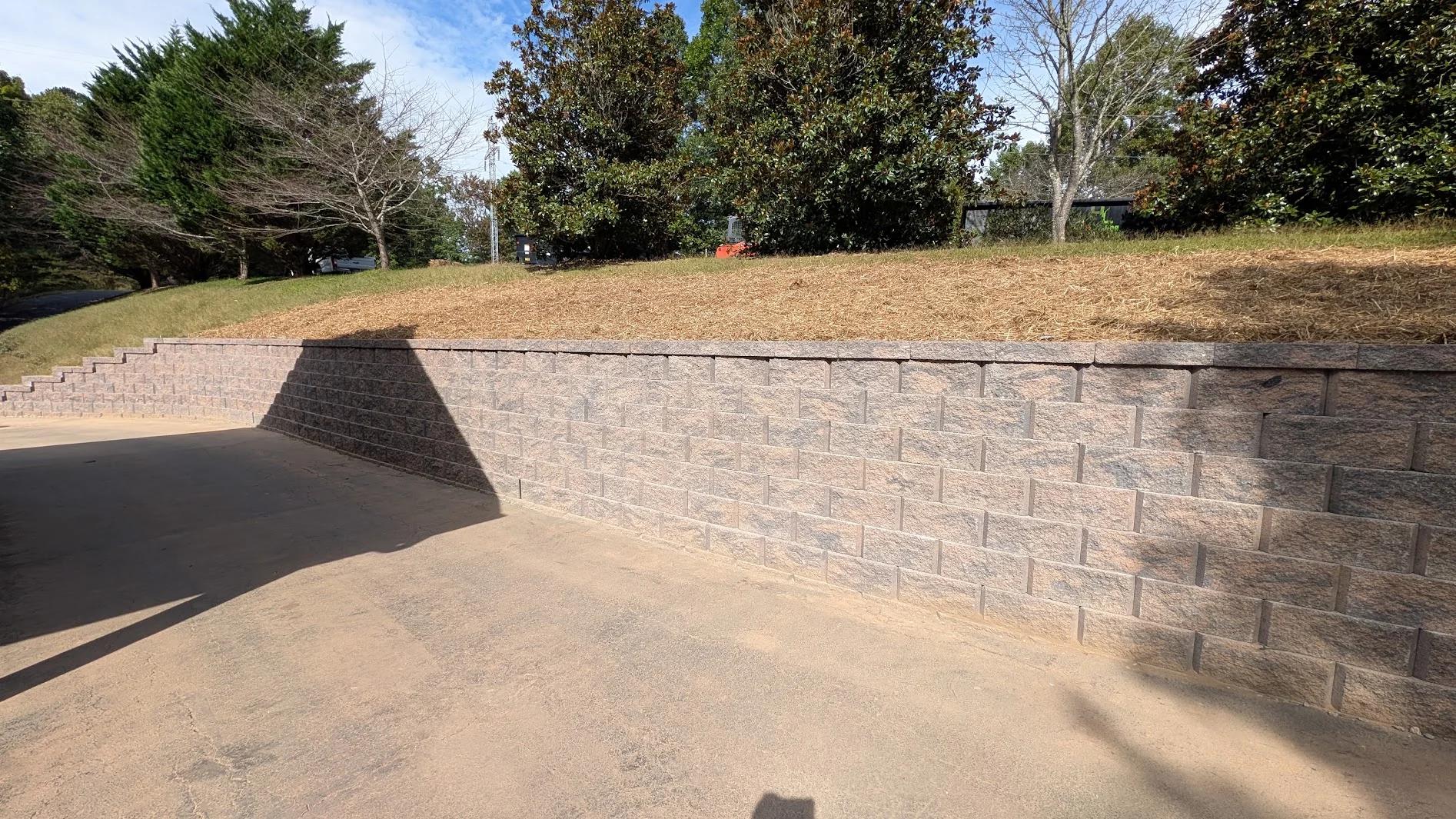
- 86 Feet Along the Drive: Approximately 86 linear feet of new wall, 6 feet tall at its highest point.
- Rockwood Harvest Blend: Modular block units in the Harvest Blend color, finished with a continuous cap course.
- Full Tear-Out: The existing cross tie wall was demolished and removed before any digging started.
- Natural Wall Ends: Both ends of the wall step down to blend into the existing grade.
- Tree Clearing: The medium size trees at the end of the wall line were removed.
- Buried Reinforcement & Drainage: Geogrid, footing drainage, #57 stone, and non-woven geotextile.
- Spoil Kept On Site: Excess dirt from the dig was spread along the slope across the driveway.
Replacing a Cross Tie Retaining Wall in Rabun Gap, GA
With the old ties pulled out, the mini excavator cut the bank back along the drive while the skid steer worked the asphalt side. The cut ran right past the carport posts, with the owner's truck still parked underneath, and it went deep into the dense red clay these North Georgia mountains are known for. In places the fresh bank stood taller than the crew working at its base.
The footing came next. We spread #57 stone along the bottom of the trench, compacted it, and leveled the first block course on top, checking each unit with a long level before moving on. A rammer packed the stone behind the base course. As the wall climbed, biaxial geogrid was rolled out over the stone behind each reinforced course, so the block face is tied back into the hillside instead of just leaning against it.
Behind the blocks, the skid steer dumped #57 stone straight into the excavation. That clean stone lets water drain down to the footing instead of building up hydrostatic pressure against the wall. At the carport end, the courses step down into the grassy slope, and pine straw now covers the finished bank above the cap. We don't often take on retaining wall replacement this far north of our usual service area, but this property had enough work to make it worthwhile. Farther down the same drive, we also replaced the rest of the old timbers with a two-tier block wall that wraps behind an existing concrete wall.
Project Gallery
The Carport Wall, Capped and Finished
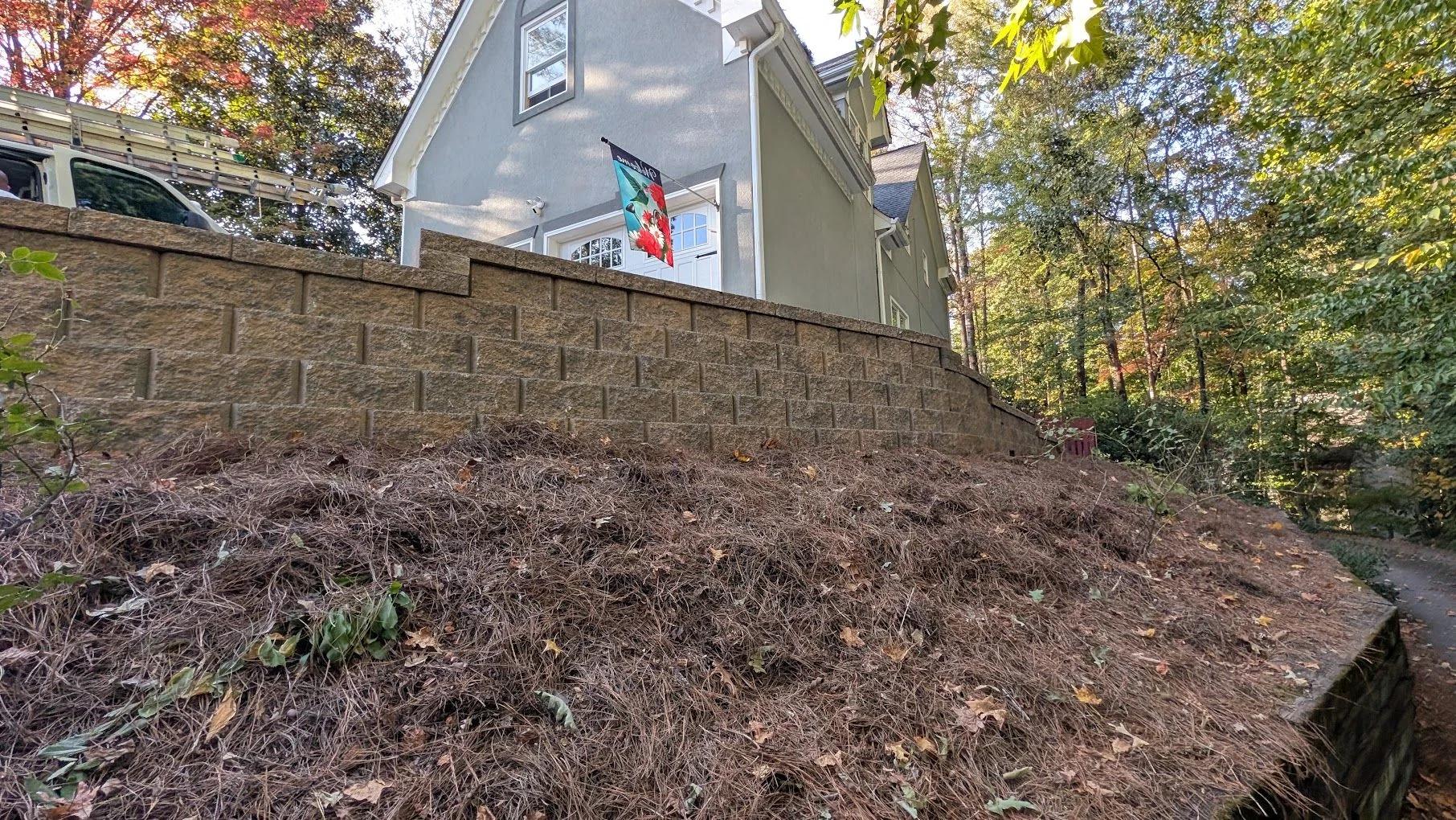
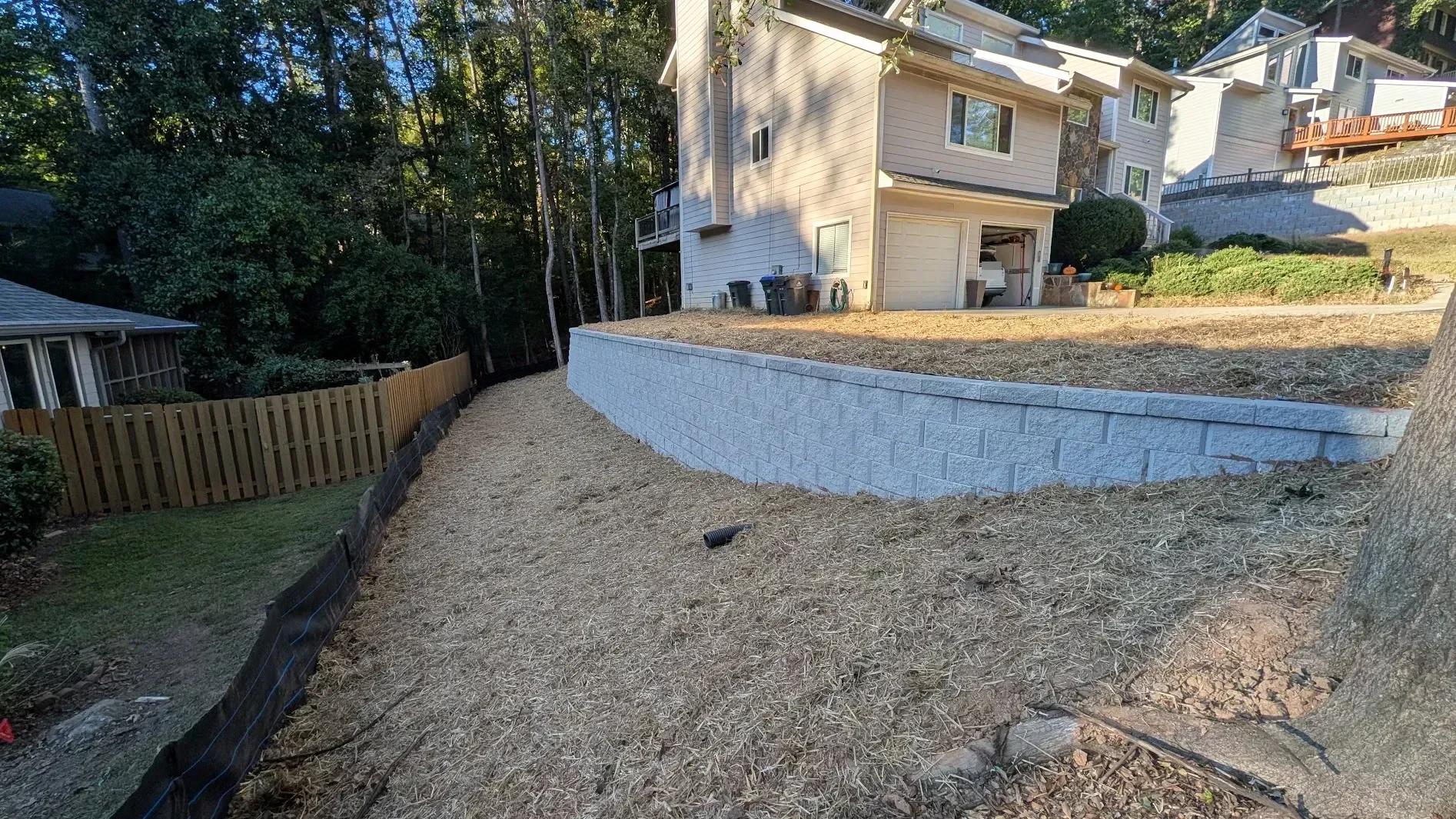
The finished wall from both ends of the driveway, plus the stepped end that turns into the slope beside the carport. Pine straw now covers the regraded bank above the cap.
Red Clay, Stone Footing & Geogrid
Once the wall is backfilled, none of this shows. These photos follow the build from the first cut into the bank to the leveled base course on its stone footing. They also show the geogrid layers and the fabric-lined drainage stone behind the block.
The Timber Wall That Came Out
Here's the cross tie wall as we found it, running the length of the drive from the curve up to the carport.
Cross Ties Only Get Worse From Here
Railroad ties rot from the inside, so a wall that looks tired today is usually weaker than it looks. Replacing it with block, geogrid, and real drainage behind it trades a wall that keeps aging for one built to hold the bank for decades. If your timbers are graying, splitting, or leaning toward the driveway, it's time to plan the replacement.